


Leg Dark Spot Remover: A Clinical Guide That Works
You're standing in front of the mirror, looking at patchy brown shadows across your shins and thighs. You've tried a cream that promised fast brightening, scrubbed until your legs felt smooth, and perhaps changed razors more than once. The spots remain, and some look darker after every attempt.
The problem is that most advice treats leg pigmentation like facial pigmentation. Leg skin is thicker, exposed to more friction, and repeatedly irritated by shaving, waxing, clothing, bites, scratching, and follicular inflammation. A product can suppress pigment production, but it can't overcome a trigger that keeps activating the same process.
A useful leg dark spot remover routine therefore starts with diagnosis, not shopping. You need to identify what kind of discoloration you have, match ingredients to the biology involved, and build a morning-to-night system that protects the result. Pigment correction is rarely a one-bottle event. It's controlled inflammation, measured exfoliation, pigment-pathway management, and consistent light protection.
Why Leg Dark Spots Resist Most Routines
A dark mark on the leg commonly follows a small injury: a razor nick, an inflamed ingrown hair, a scratched insect bite, or a rash that has settled. The surface may look healed while pigment-producing cells remain stimulated by the earlier inflammation. That is why choosing a leg dark spot remover before identifying the trigger often produces little change.
The worldwide burden helps explain why these marks can persist. A survey of 50,552 adults found that 50% reported at least one pigmentary disorder, and 69.5% of affected respondents said it had lasted five years or longer (the worldwide pigmentary-disorder survey). For many people, discoloration is a long-term management issue rather than a seasonal cosmetic concern.
The leg-specific obstacles
Legs receive repeated mechanical stress. Tight clothing rubs the thighs, razors pass over the same follicles, waxing pulls at follicular openings, and dryness increases friction. Each episode can produce enough inflammation to reactivate pigment signaling, especially where follicular bumps or scratching continue.
Sun exposure adds a separate source of stimulation. UVA can cause immediate pigment darkening that lasts from minutes to hours, while continued exposure contributes to delayed tanning (the dermatology review of UV-related pigmentation). Bare legs therefore need light protection while spots are fading. Otherwise, a routine may reduce existing discoloration while new pigment signals continue.
Practical rule: A fading product cannot offset repeated shaving irritation, untreated follicular bumps, or unprotected sun exposure.
What this guide changes
Start with the pattern, then select the treatment:
- Diagnose the cause: Check whether the mark follows inflammation, sun exposure, follicular roughness, or a vascular process.
- Match the mechanism: Use exfoliants for retained surface pigment and texture, pigment regulators for melanin signaling, and retinoids when turnover support is appropriate.
- Protect the barrier: Irritated legs can become more pigmented, so excessive layering may delay improvement. Mesoderm RX systems should be configured around the trigger, tolerance, and treatment goal rather than treated as a universal fix.
Clearance also requires patience. A facial spot may appear to respond sooner, while leg discoloration often needs a longer, consistent treatment window before the change is obvious. Burning or persistent redness is a sign to reduce intensity and reassess the diagnosis, not to add more products.
How Pigment Actually Forms on the Legs

Featured Product
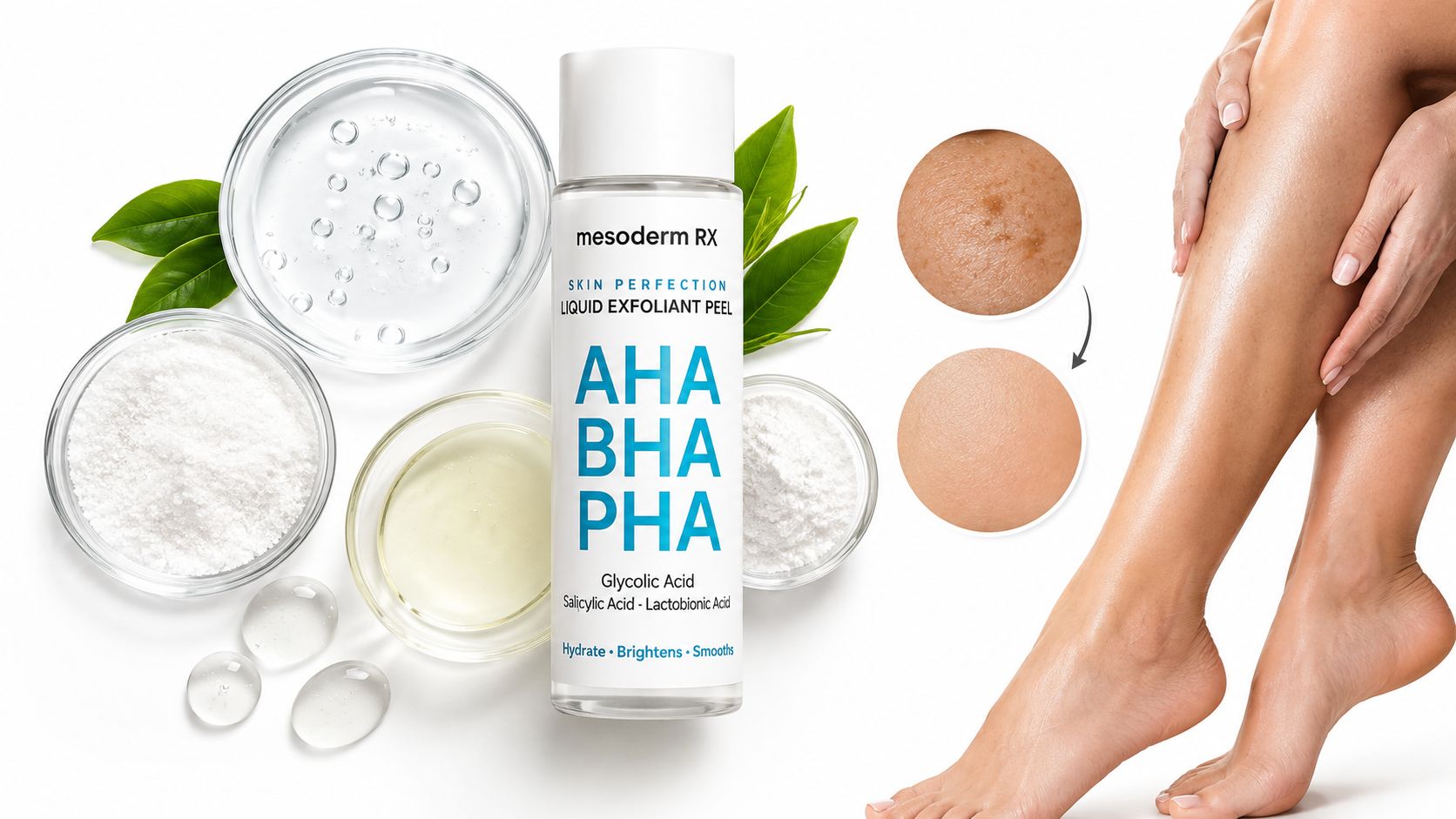
Skin Perfection Liquid Exfoliant Peel AHA BHA PHA
Unleash the power of exfoliation with this multi-acid formula that helps clear pores, smooths texture, and restores your skin’s natural radiance for a refreshed, glowing complexion.
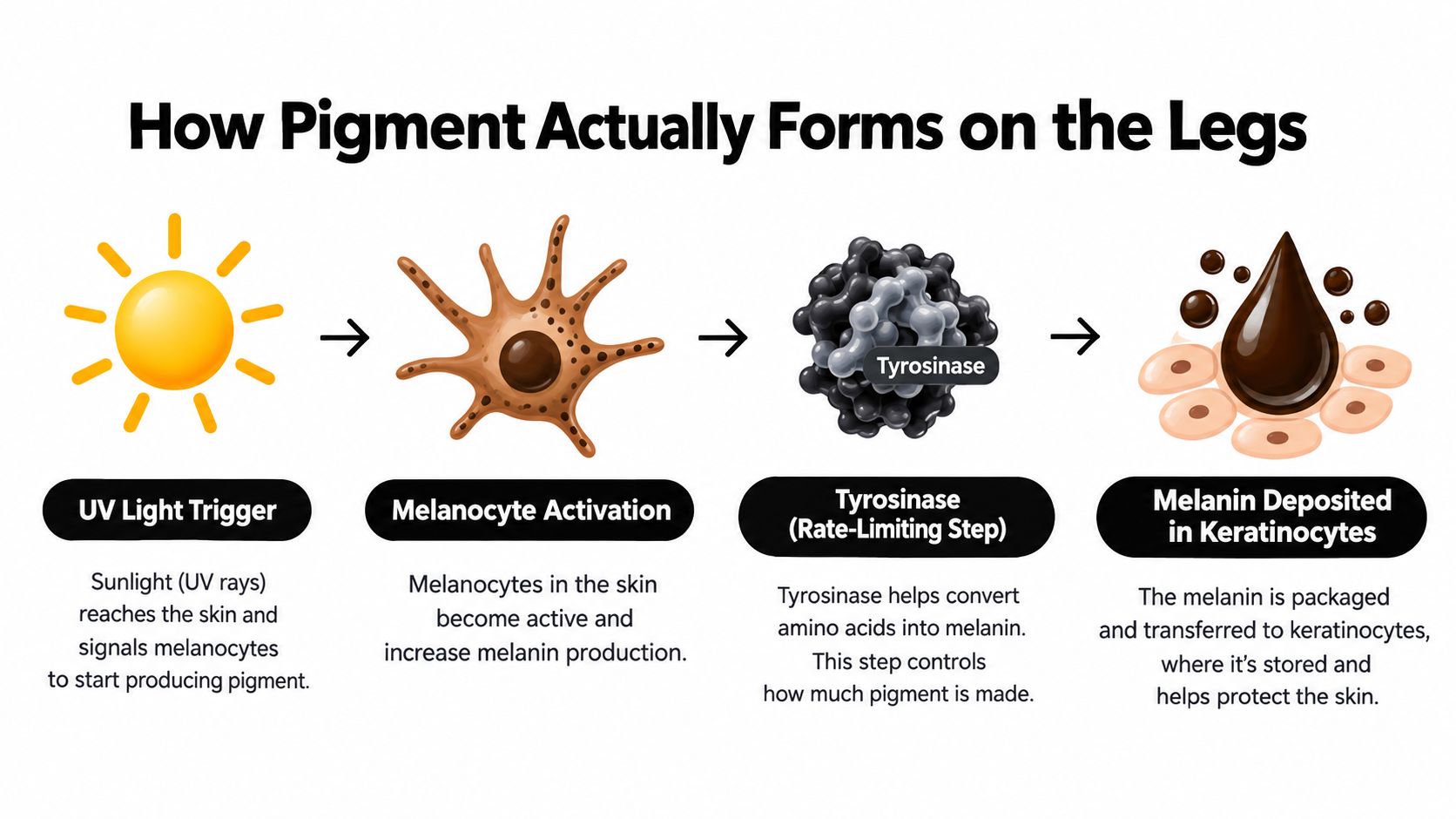
Shop Now →Melanin is the pigment that gives skin its color. When ultraviolet light, inflammation, or hormonal signaling activates melanocytes, those cells increase activity through a pathway controlled by tyrosinase, the rate-limiting enzyme involved in melanin production.
A useful analogy is a factory. The melanocyte is the production floor, MITF is the foreman directing pigment output, and tyrosinase is the main switch that starts the manufacturing line. Tyrosine is converted through intermediate steps including dopa and dopaquinone, eventually producing melanin that gets packaged into melanosomes and transferred into surrounding keratinocytes.
Three ways a treatment can help
A useful product system can work at several points:
- Reduce the signal. Ingredients such as azelaic acid, alpha-arbutin, licorice-derived glabridin, and certain vitamin C derivatives can help regulate tyrosinase activity or pigment signaling.
- Slow the foreman. Inflammatory signaling can increase MITF and raise expression of pigment-related enzymes including tyrosinase, TRP-1, and TRP-2. Controlling irritation is therefore part of pigment treatment, not an optional comfort step (the review of PIH mechanisms and treatment).
- Move retained pigment out. Retinoids and hydroxy acids support the shedding of pigmented keratinocytes. This doesn't erase pigment instantly, but it helps the skin gradually replace cells carrying excess melanin.
Legs can be particularly slow because the stratum corneum is often thicker, surface shedding is less rapid, and repeated micro-injury keeps inflammatory signaling active. Follicular openings can also be involved when shaving bumps or ingrown hairs are the original trigger, which means a routine must address both the mark and the texture around it.
For a broader explanation of pigment pathways and treatment categories, see this clinical overview of hyperpigmentation causes and treatment.
Identifying the Type of Spot You Have
The right leg dark spot remover depends on what created the discoloration. A brown patch left after a bite doesn't need the same strategy as reddish-brown staining around an ankle, and neither should be treated like a sharply defined sun spot.
Common Leg Pigmentation Types at a Glance
| Pigment Type | Typical Location | Border & Color | Surface Texture | Common Trigger |
|---|---|---|---|---|
| Post-inflammatory hyperpigmentation | Areas affected by shaving, waxing, bites, cuts, rashes, or procedures | Irregular brown to gray-brown mark that follows the original injury | Usually flat after healing | Inflammation or trauma |
| Solar lentigines | Sun-exposed shins and other exposed leg areas | Discrete, well-defined brown macules | Flat and smooth | Cumulative ultraviolet exposure |
| Keratosis pilaris with post-inflammatory staining | Outer thighs and areas with follicular bumps | Scattered pink, red, or brown marks around bumps | Rough, raised, or sandpaper-like | Follicular keratin buildup and irritation |
| Melasma | Usually face, but may extend below the knees in hormonal contexts | Symmetric brown or gray-brown patches | Generally flat | Hormonal signals plus light exposure |
| Venous, diabetic, or stasis-related discoloration | Often lower legs and around ankles | Reddish-brown or diffuse darker areas | May accompany swelling, scaling, thickening, or texture change | Venous disease, circulation problems, diabetes, or medication-related change |
The pattern gives you the first answer
Post-inflammatory hyperpigmentation, or PIH, usually appears exactly where the irritation happened. A row of marks after shaving, isolated spots at old bite sites, or discoloration around healed scratches points toward this diagnosis. PIH is an acquired pigment disorder caused by injury or inflammation, and common triggers include eczema, acne, burns, insect bites, shaving irritation, and dermatologic procedures (the medical reference on PIH causes).
Solar lentigines are typically more uniform and sharply defined. They reflect cumulative ultraviolet exposure and generally don't disappear just because the season changes. A mark that's changing shape, developing irregular borders, bleeding, or refusing to heal shouldn't be assumed to be a harmless sun spot.
Keratosis pilaris announces itself through texture. If you can feel small rough bumps on the outer thighs, exfoliation may improve the keratin buildup and the surrounding discoloration, but aggressive scrubbing can intensify inflammation.
Melasma is usually symmetric and patch-like rather than scattered around individual follicles. It's primarily associated with the face, though hormonal patterns can extend elsewhere. Venous or diabetic discoloration deserves more caution, particularly when color appears around the ankles alongside swelling, heaviness, scaling, tenderness, or other changes. In those cases, cosmetic brightening may be the wrong first intervention (the clinical guide to dark spots on legs).
Why Most Leg Dark Spot Removers Fail
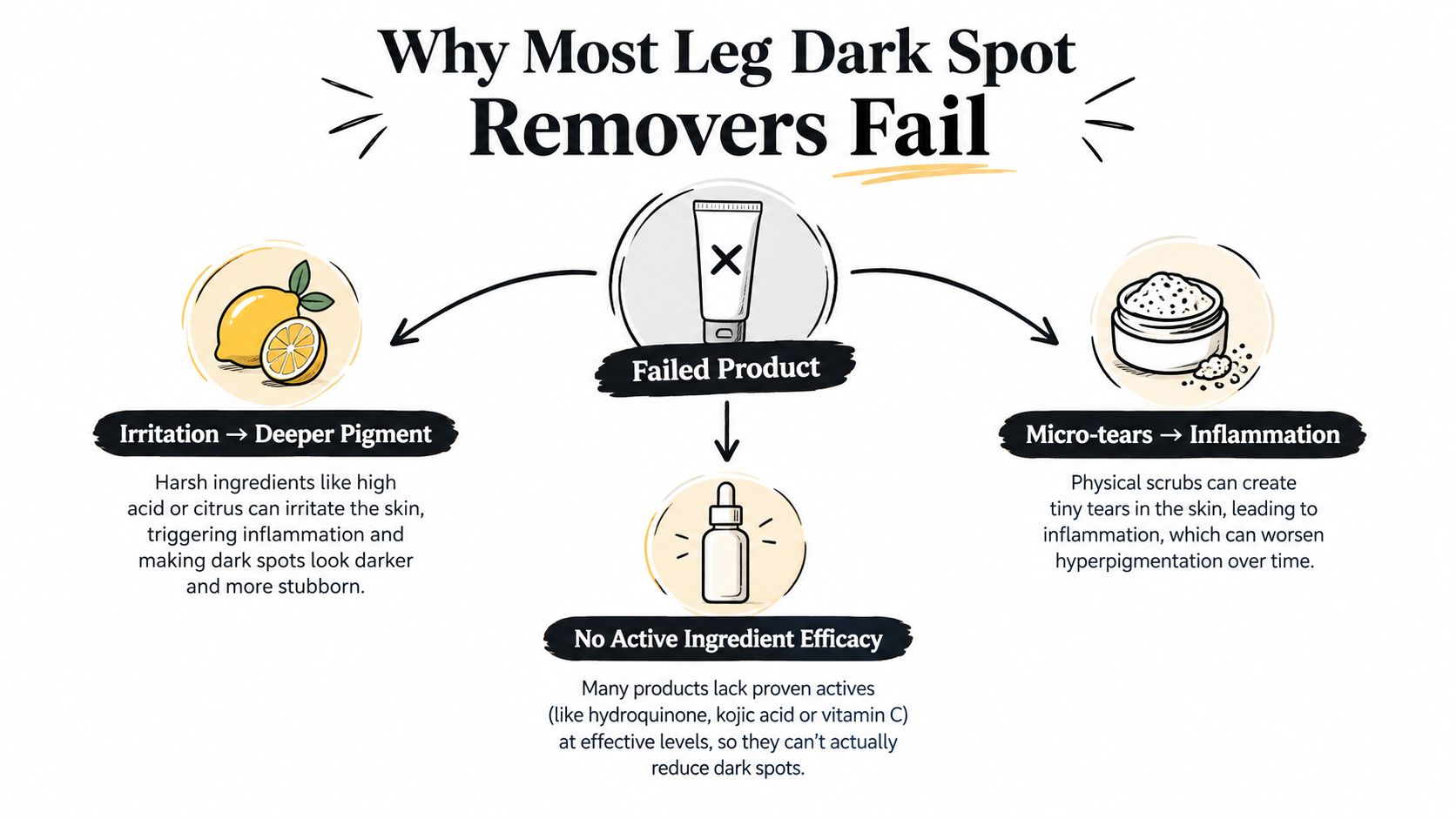
Lemon juice doesn't diagnose the spot, control the cause, or provide predictable pigment regulation. It can irritate compromised skin, and some citrus compounds can increase light sensitivity. Essential oils create a similar problem when used undiluted or without careful formulation. Irritation is not evidence that a brightening product is working.
Abrasive scrubs fail for a different reason. They create friction and micro-injury, which can activate the same inflammatory pathway responsible for PIH. You may temporarily remove surface flakes, but the resulting irritation can leave the mark darker and the surrounding skin rougher.
The single-ingredient trap
A single active can be useful, but it rarely covers the entire problem. An exfoliant may loosen pigmented surface cells without preventing new pigment formation. A tyrosinase-regulating ingredient may reduce pigment signaling without solving ingrown hairs. A moisturizer may improve the barrier while leaving the original discoloration untouched.
The most important failure is conceptual. People treat pigmentation as a bottle problem when it's often a trigger-control problem first.
Clinical reality: If shaving bumps keep appearing, the most effective brightening step may be changing hair-removal technique rather than adding another serum.
Why consistency beats intensity
Leg skin needs time to shed pigmented cells, and active ingredients need repeated use to influence the pathway. Expert guidance commonly reassesses initial topical therapy after 8 to 12 weeks when further treatment may be considered (the expert review of topical depigmenting therapy). That doesn't mean every mark will clear within that window. It means applying more product, more often, usually isn't a rational shortcut.
A reliable system has four parts: identify the cause, select compatible actives, preserve the barrier, and protect exposed skin from UV and visible light. The routine creates the result. The bottle is only one component.
Evidence-Backed Ingredients That Fade Leg Spots
Ingredients should be selected by mechanism and tolerance, not by the word “brightening” on the label. A practical formula may combine surface renewal, pigment regulation, antioxidant support, and barrier protection.
Match the active to the problem
| Ingredient | Mechanism | Best For | Notes |
|---|---|---|---|
| Glycolic acid | Loosens corneocyte adhesion and increases surface renewal | Tolerant skin with rough texture and retained pigment | More active and potentially more irritating |
| Lactic acid | Exfoliates while supporting hydration | Dry or sensitive legs | Often a more comfortable starting AHA |
| Mandelic acid | Provides slower, gentler exfoliation | Sensitive or pigment-prone skin | Useful when stronger acids cause irritation |
| Salicylic acid | Penetrates follicular material and helps reduce buildup | Keratosis pilaris and shaving-related bumps | Avoid applying over cracked or inflamed skin |
| Gluconolactone and lactobionic acid | Gentle exfoliation with humectant support | Reactive or dry skin | PHAs can fit barrier-focused routines |
| Vitamin C | Supports antioxidant defense and can interfere with tyrosinase activity | Morning pigment and environmental exposure | Choose a stable derivative if L-ascorbic acid irritates |
| Niacinamide | Helps limit melanosome transfer and supports the barrier | Uneven tone with sensitivity or dryness | Formulas around 4% to 5% are commonly used |
| Retinal or retinol | Promotes keratinocyte turnover and pigment dispersion | Persistent PIH in retinoid-tolerant skin | Use on separate nights from strong acids |
| Azelaic acid, alpha-arbutin, cysteamine, and glabridin | Regulate pigment signaling and inflammation | PIH-prone skin and uneven tone | Introduce gradually and monitor tolerance |
AHAs such as glycolic, lactic, and mandelic acid work mainly at the surface by reducing adhesion between corneocytes. Salicylic acid is more useful when a follicular component is present. PHAs, including gluconolactone and lactobionic acid, offer a gentler route for skin that becomes tight or reactive with conventional acids.
Vitamin C, niacinamide, and pigment-regulating alternatives fill a different role. They help address pigment formation and transfer rather than removing surface cells. Retinoids can improve turnover, but they're not suitable for every patient and can worsen PIH if they cause persistent irritation.
For a deeper ingredient discussion, see this guide to ingredients used for hyperpigmentation. A product such as Skin Perfection Liquid Exfoliant Peel AHA BHA PHA combines AHA, BHA, and PHA categories, with the catalog snapshot identifying salicylic acid, glycolic acid, lactic acid, and lactobionic acid among its formula components.
Layer without creating dermatitis
Apply water-based serums before richer creams, then finish with occlusive products if needed. Don't use a retinoid and a strong acid in the same evening step, especially when treating the legs broadly. Alternate exfoliation nights with barrier-repair nights.
Patch test every new active on a small area for 48 hours before wider application. Burning, swelling, rawness, or persistent redness means the regimen is too aggressive, not that pigment is being removed faster.
Building a Step-by-Step Leg Routine
A leg routine should match the likely cause of the mark and the skin's tolerance. Treating every dark spot with stronger acids can prolong post-inflammatory hyperpigmentation, so use a steady schedule and adjust one variable at a time.
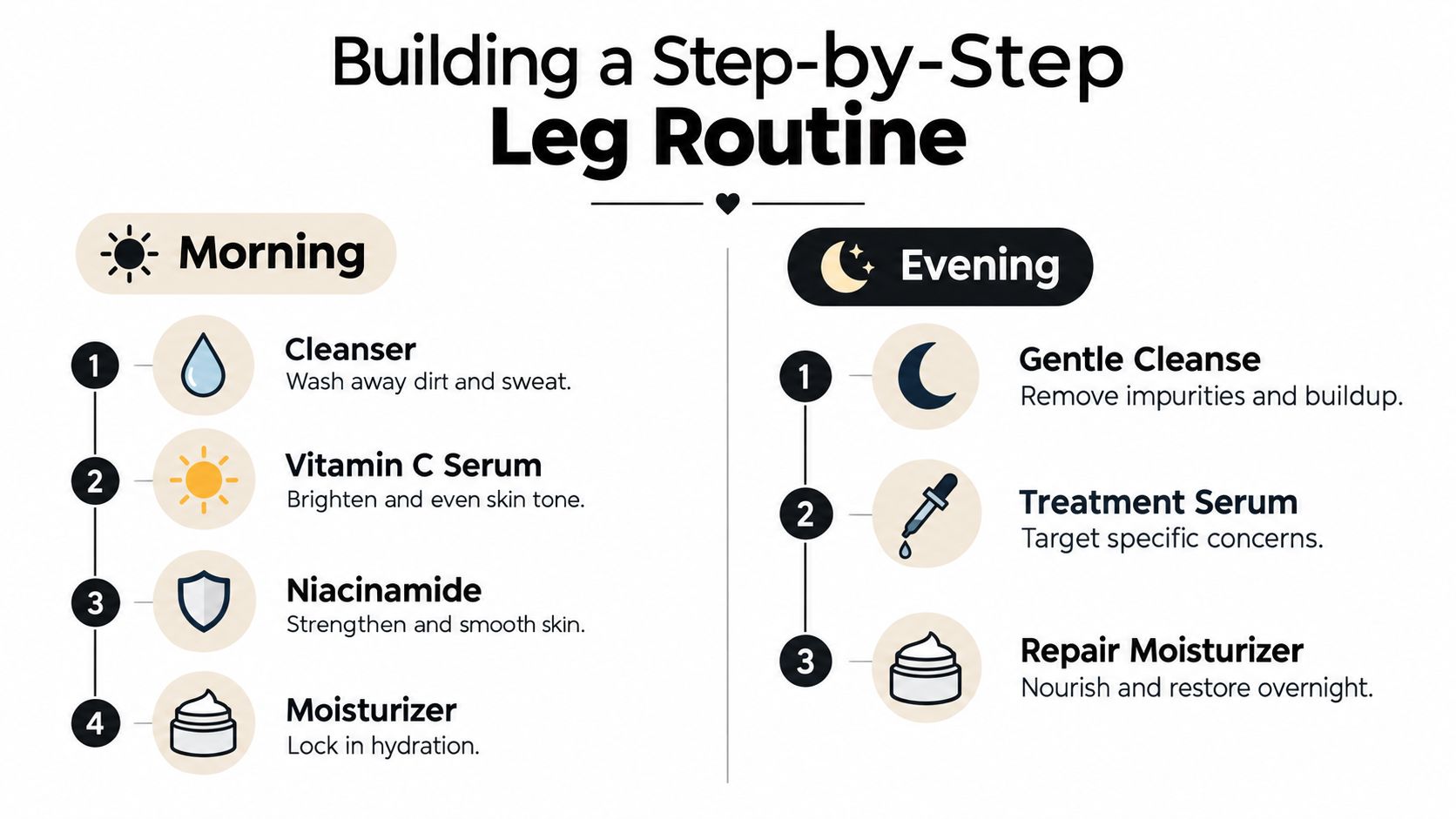
Morning protocol
- Cleanse gently. Use a non-staining cleanser. Avoid scrubbing with a cloth or bar, which can add friction.
- Apply antioxidant support. Use vitamin C or another antioxidant serum on clean, dry skin.
- Add niacinamide. It can support the skin barrier and help regulate uneven pigment.
- Moisturize. Choose ceramides or a lightweight emollient such as squalane, depending on dryness.
- Protect exposed legs. Apply broad-spectrum SPF 30 or higher to uncovered areas. Reapply every two hours during outdoor exposure, consistent with established PIH photoprotection guidance.
The systematic review of PIH treatment supports treating photoprotection as part of pigment care, not as an optional finishing step. If you prefer a body moisturizer with brightening ingredients, Whitening Advanced Body Essence Lotion is listed with niacinamide, vitamin C, kojic acid, alpha-arbutin, allantoin, and moisturizing ingredients. Its catalog directions specify nighttime use on clean, dry affected areas and sunscreen during the day.
Evening protocol
Cleanse, then select one treatment path:
- Exfoliation nights: Use an AHA or PHA two to three nights per week, with non-consecutive applications.
- Retinoid nights: Use retinal, retinol, or another tolerated retinoid on separate evenings.
- Regulation nights: Apply azelaic acid or alpha-arbutin, followed by a richer barrier cream.
- Recovery nights: Use moisturizer alone when the skin feels dry, tight, or sensitized.
Patch test on a small inner-knee area for 48 hours before treating both legs. Photograph the same spots from the same distance and under the same lighting. Around the halfway point, improvement may appear as softer edges, less contrast, or fewer visibly dark areas rather than complete clearance. Photographs show that gradual shift more reliably than daily mirror checks.
Visible light can also contribute to pigment persistence, even when UV exposure seems limited. Consistent sunscreen use therefore remains relevant alongside the evening treatment plan.
For a separate question about soothing lotion on highly sensitive skin, is aloe vera lotion safe for hemorrhoids offers location-specific context. It is not a treatment protocol for leg pigmentation, but the distinction reinforces why tolerance must be judged by body site.
Treating Sensitive and Intimate Areas Safely
The bikini line, inner thighs, backs of the knees, and the crease behind the knee need a modified protocol. These zones experience heat, moisture, occlusion, and friction, and the skin can react more quickly than the broad outer shin.
Use the same biological logic, but reduce intensity. A PHA is often a more reasonable starting point than glycolic acid. Retinoids shouldn't be applied to mucosal-adjacent skin, and fragranced formulas are poor choices when the area is already irritated. Shorter contact times and less frequent application are safer than trying to force a standard leg routine into a fold.
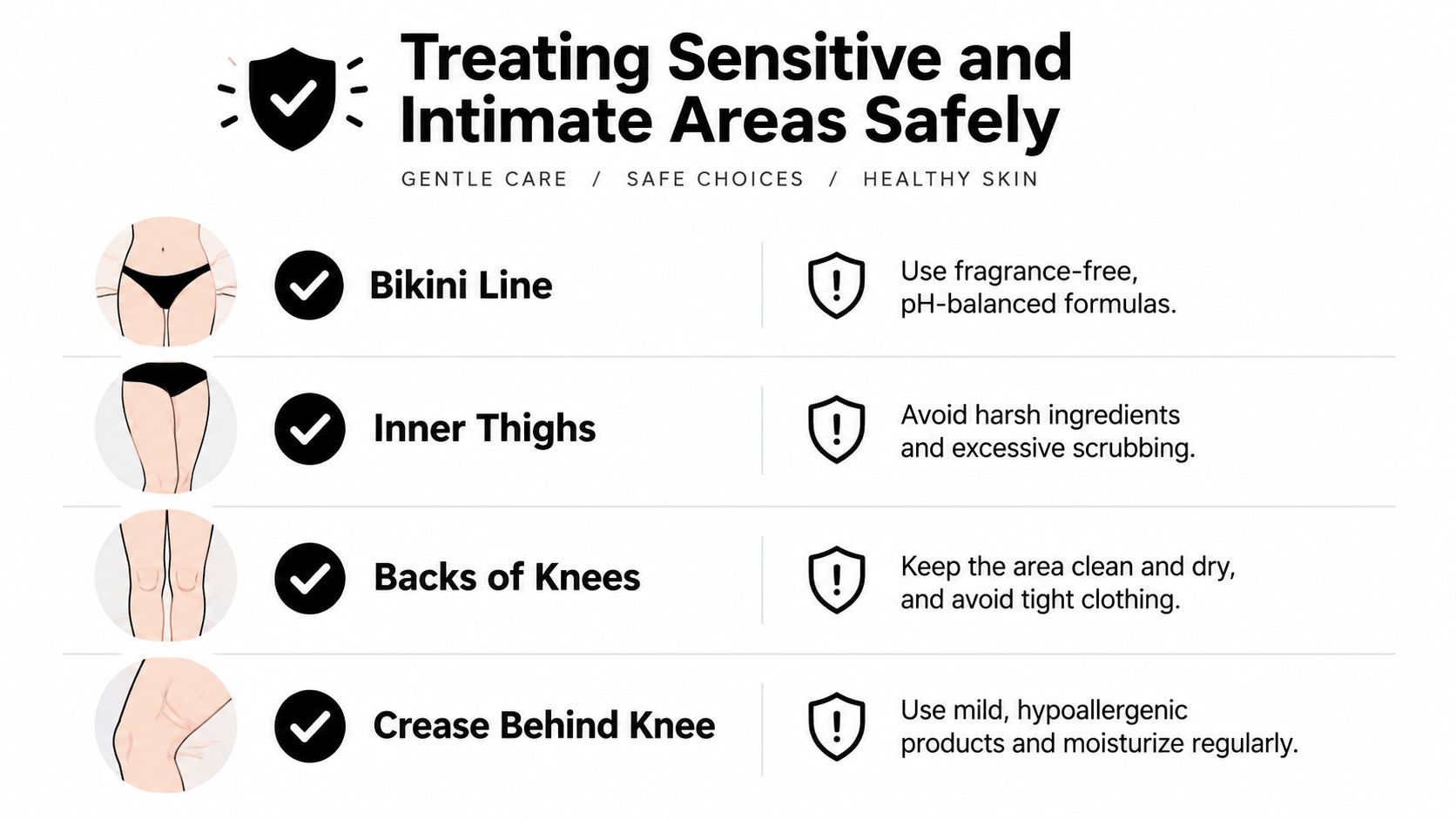
A safety checklist for delicate zones
- Patch test first: Apply the formula to a small area and wait 48 hours before broader use.
- Stop at stinging: Persistent stinging, burning, swelling, or rawness signals irritation.
- Separate hair removal: Don't combine leave-on acids with depilatory products within 72 hours.
- Avoid occlusion: Heavy layers trapped under tight clothing can increase irritation.
- Review weekly: Reduce frequency if friction, shaving, sweating, or dryness is keeping the area inflamed.
Mesoderm RX describes its broader collection as vegan and hydroquinone-free, but ingredient positioning doesn't replace INCI screening or patch testing. Check the complete ingredient list, avoid applying products to mucosal surfaces, and remember that “clean” or “natural” doesn't automatically mean non-irritating.
The practical goal isn't weaker treatment. It's lower exposure, slower titration, and better control of inflammation. If the area remains itchy, painful, cracked, or repeatedly inflamed, stop brightening treatment and address that condition first. More information on location-specific considerations is available in this guide to lightening intimate areas.
When to See a Dermatologist and Final Takeaways
A leg mark that is rapidly enlarging, irregularly bordered, bleeding, persistently itchy, non-healing, or changing in color or shape needs an in-person assessment before you apply an over-the-counter leg dark spot remover. Arrange medical review for pigment within an old scar, one-sided discoloration, or a new mark in someone with diabetes or venous disease.
A dermatologist can use dermoscopy to examine the lesion's structure and may recommend a biopsy when the pattern is unclear. If the diagnosis is post-inflammatory hyperpigmentation (PIH) or another benign pigment disorder, options may include prescription combinations, in-office peels, laser or energy-based procedures, or treatment of an underlying vascular or inflammatory condition. Combination treatment may produce more improvement than a topical product alone, although procedures can also trigger inflammation. The diagnosis, skin tone, trigger, and tolerance should guide the choice.
Your one-week action checklist
- Identify the pattern: Record the location, border, texture, and likely trigger.
- Stop the irritant: Change shaving, scratching, waxing, or abrasive-scrub habits that keep causing inflammation.
- Choose one exfoliant: Start with an AHA or PHA instead of stacking acids.
- Add morning support: Use a stable vitamin C or niacinamide serum.
- Protect exposed legs: Apply broad-spectrum SPF 30 or higher whenever uncovered.
- Patch test: Test each new product for 48 hours.
- Book an evaluation: Act promptly if any red flag is present.
Diagnosis comes first, then the routine. Once the trigger is controlled, measured exfoliation, pigment regulation, moisturization, and light protection can improve the odds of visible fading without continually restarting inflammation.
Mesoderm RX offers targeted brightening and body-care options, including exfoliating AHA, BHA, and PHA formulas and a body essence for uneven tone. Visit Mesoderm RX to review the available systems and match a routine to the spot pattern, skin tolerance, and daily sun exposure.