


Intimate Whitening Body Lotion: A Safe How-To Guide
You notice a darker tone along the bikini line, inner thighs, or under-belly fold and assume your lotion has failed. Then you scrub harder, shave again, or switch to a stronger “whitening” cream. That cycle often creates the very inflammation that keeps the area dark.
An intimate whitening body lotion can help with friction-related hyperpigmentation, but it can't correct every cause of darkening, and it shouldn't be applied to internal genital tissue. The reliable approach is clinical rather than aggressive: identify the pigment pattern, remove the trigger, choose tolerable actives, and measure progress slowly.
Why Intimate Areas Pigment Differently
The skin around the groin and inner thighs deals with conditions that facial skin usually doesn't. Skin rubs against skin and clothing, sweat remains trapped, hair removal creates irritation, and hormonal signals can influence melanocyte behavior. The area may have a thicker outer layer in places, yet it can still react quickly to fragrance, acids, shaving, and occlusion.
Melanocytes produce melanin, the pigment that gives skin its color. Tyrosinase is a central control point in that process. Reviews of pigmentation biology describe tyrosinase inhibition as a key way topical agents reduce melanin production and fade hyperpigmentation (review of tyrosinase inhibition and pigmentation treatment).
Friction and heat add another layer. Repeated rubbing can produce low-grade inflammation, while moisture and occlusion keep the skin exposed to that irritation for longer. Androgen-related changes and other hormonal cues can increase melanocyte sensitivity, so the same product may behave differently on the inner thigh than on the arm.
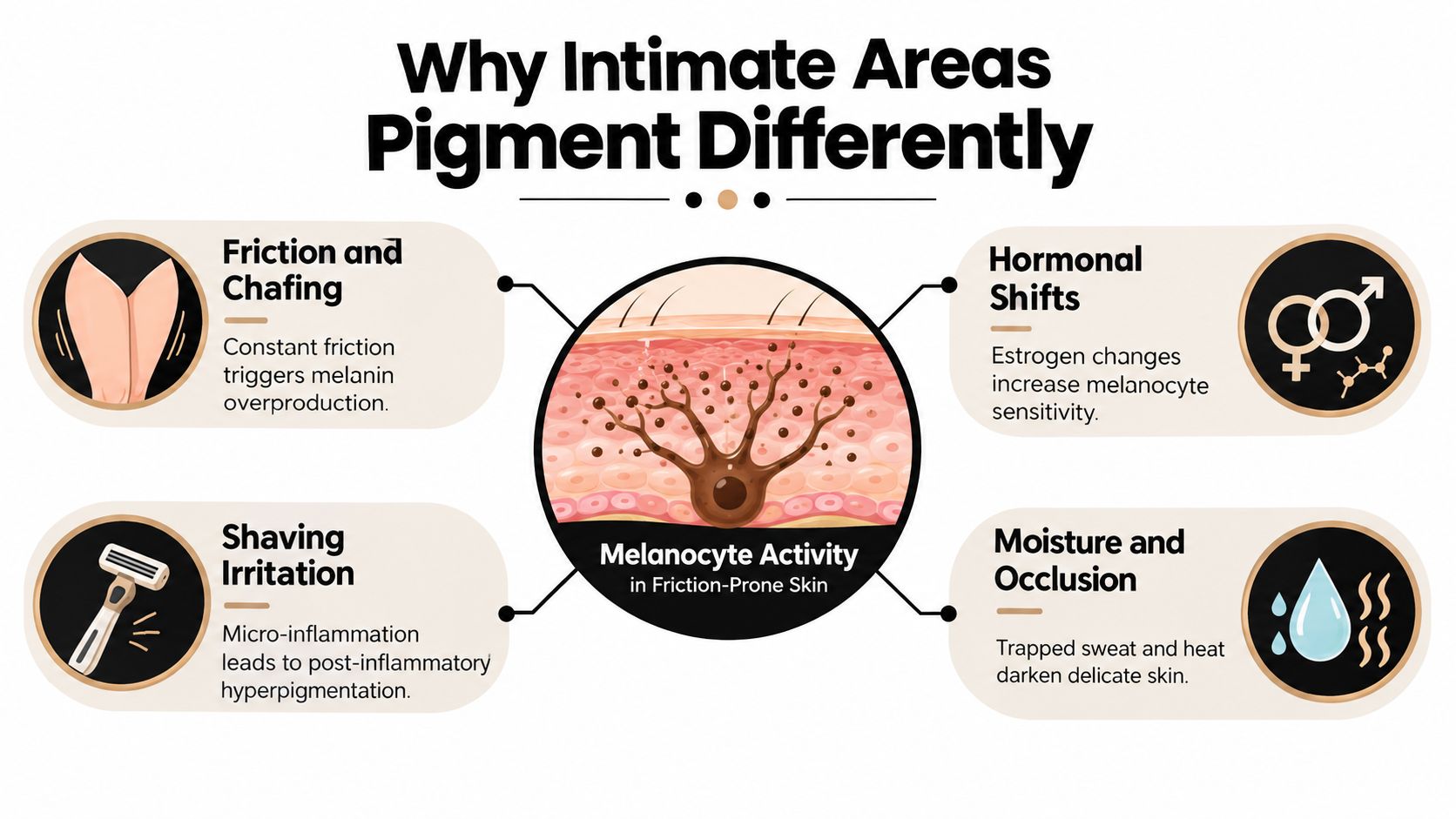
The friction and inflammation loop
Shaving and waxing can leave microscopic irritation around follicles. Tight clothing adds mechanical stress, and trapped sweat softens the skin surface so rubbing causes more disruption. Inflammation releases mediators that stimulate melanocyte activity and increase tyrosinase expression, which can increase melanin production in the affected skin (clinical overview of post-inflammatory hyperpigmentation).
That explains why a dark bikini line isn't automatically a hygiene problem. It may be a record of repeated irritation. The practical consequence is important: diagnose the trigger before intensifying the lotion.
For a broader explanation of pigment types and treatment principles, see this guide to hyperpigmentation causes, types, and treatment. A tolerance-led protocol usually outperforms a search for the harshest bleaching product, particularly in skin that rubs, sweats, or undergoes frequent hair removal.
Why Most DIY Whitening Routines Backfire
Lemon juice feels like a brightening ingredient because it's acidic. Baking soda feels cleansing because it's alkaline. Neither belongs in an improvised intimate brightening routine. Citrus and alkaline pastes can disrupt the skin barrier, provoke inflammation, and leave the area more reactive. Once inflammation returns, pigment production can return with it.
Physical scrubs create a similar problem. A gritty exfoliant or rough mitt may remove surface scale temporarily, but repeated abrasion creates micro-injury at precisely the sites already exposed to friction. The skin may feel smoother while the underlying post-inflammatory hyperpigmentation becomes harder to clear.
Undereye creams and heavy face creams aren't automatically suitable for the groin. Their textures may occlude follicles, trap sweat, and aggravate follicular irritation. “Instant whitening” soaps often deliver a short-lived surface effect through cleansing or optical residue, not controlled pigment correction.
Clinical rule: Stinging, persistent redness, peeling, or burning isn't proof that a product is working. In intimate skin, it often means the routine is feeding pigmentation.
| Common DIY Whitening Methods vs. Clinical Reality | Perceived Benefit | Actual Skin Response | Net Result |
|---|---|---|---|
| Lemon juice | A quick acidic brightening effect | Barrier disruption and irritation | Pigment may deepen |
| Baking soda paste | A “deep clean” sensation | Alkaline stress and dryness | More reactivity |
| Physical scrub | Smoother surface | Micro-injury in friction zones | Post-inflammatory pigment |
| Instant whitening soap | Immediate visual change | Cleansing or optical residue without controlled treatment | No dependable correction |
An intimate body product should be assessed by its ingredient profile, barrier support, and tolerability, not by how strongly it tingles. For example, Whitening Advanced Body Essence Lotion lists niacinamide, vitamin C, kojic acid, and alpha arbutin among its ingredients, and its product information advises applying a thin layer to clean, dry body skin at night while using daytime sun protection. Its snapshot also says it isn't intended for the face or neck and directs sensitive users toward the brand's intimate cream.
If a discoloration cream produces no change, the answer may be trigger control, incorrect diagnosis, poor adherence, or excessive irritation. This clinical look at why discoloration creams fail is more useful than escalating strength.
Featured Product
AHA + BHA + PHA Skin Brightening Serum 30ml
This powerful formula combines exfoliating acids to brighten dark spots, refine skin texture, and reveal a smoother, more radiant complexion.
Shop Now →
Ingredients to Seek and Ones to Avoid
An intimate whitening body lotion should address three points: reduce excess pigment signaling, support the skin barrier, and avoid triggering further inflammation. A short, tolerable formula is more useful than a crowded ingredient list. Consistent use matters more than a strong tingling sensation.
Brightening ingredients with a better risk profile
Niacinamide is a practical starting point. At 2 to 5 percent, it may reduce pigment transfer from melanocytes to surrounding skin cells while supporting barrier function. It is generally easier to tolerate than aggressive bleaching approaches, although compromised skin can still react.
Alpha arbutin offers a gentler tyrosinase-directed option for reducing pigment formation without physical abrasion. Kojic acid dipalmitate is a more stable kojic-acid derivative found in some formulas. Both require attention to product quality and skin tolerance.
For texture, choose a low-strength AHA, BHA, or PHA instead of a harsh scrub. Glycolic and lactic acids resurface the skin, salicylic acid can help around follicles, and lactobionic acid provides a milder PHA approach. Use one exfoliating system at a time. AHA + BHA + PHA Skin Brightening Serum 30ml lists kojic, glycolic, lactic, salicylic, and lactobionic acids alongside hydrating ingredients, with daytime or nighttime use described in its catalog information.
Azelaic acid at 10 to 20 percent can address pigment signaling and inflammation together. That combination is useful when shaving or friction contributes to recurring discoloration. Encapsulated retinal or low-dose retinol may support cell turnover, but introduce retinoids on alternate nights. Keep them away from irritated, freshly shaved, or mucosal skin. For a closer examination of active options, see this guide to natural ingredients that treat hyperpigmentation.
To compare how other brands present intimate-care formulas, you can find Supplemynts Inc intimate care and review its ingredient disclosure.
Ingredients that deserve caution
Hydroquinone can be effective in selected medical cases, but it is not a casual long-term intimate lotion ingredient. Reviews identify 2 to 4 percent hydroquinone as a first-line depigmenting range and emphasize reassessment after 8 to 12 weeks because prolonged use raises safety concerns (skin-of-color hyperpigmentation treatment review). Regulatory status differs by market. U.S. FDA guidance states that over-the-counter skin-lightening products containing hydroquinone or mercury are illegal, and hydroquinone is not approved for over-the-counter sale.
Avoid mercury, unregulated topical steroids, and formulas that hide their complete ingredient list. High concentrations of denatured alcohol, strong fragrance, essential-oil blends, and harsh sulfate surfactants may worsen dryness and inflammation. Parabens alone do not determine overall safety. Transparent labeling, appropriate formulation, and controlled use matter more than a marketing label.
Market rules also affect product claims and formulation. The EU lists skin-whitening products and external intimate-hygiene products under cosmetics, while Australia regulates products marketed with therapeutic effects, including most skin-whitening lotions, as medicines. One claim can therefore create different ingredient, labeling, and enforcement obligations across markets (EU cosmetics regulation framework).
Pre-Application Checklist and Patch Testing
A product applied over a cut, active rash, folliculitis, sunburn, fresh waxing irritation, or unexplained peeling is more likely to sting and inflame. Inspect the treatment area first. A lotion cannot correct a damaged barrier, and irritation can deepen the pigmentation you are trying to improve.
Stop shaving, waxing, and activities that cause substantial friction for 48 hours before starting. This allows the surface to settle and makes any reaction easier to interpret. Choose breathable underwear, and limit tight clothing after application if the area tends to sweat.
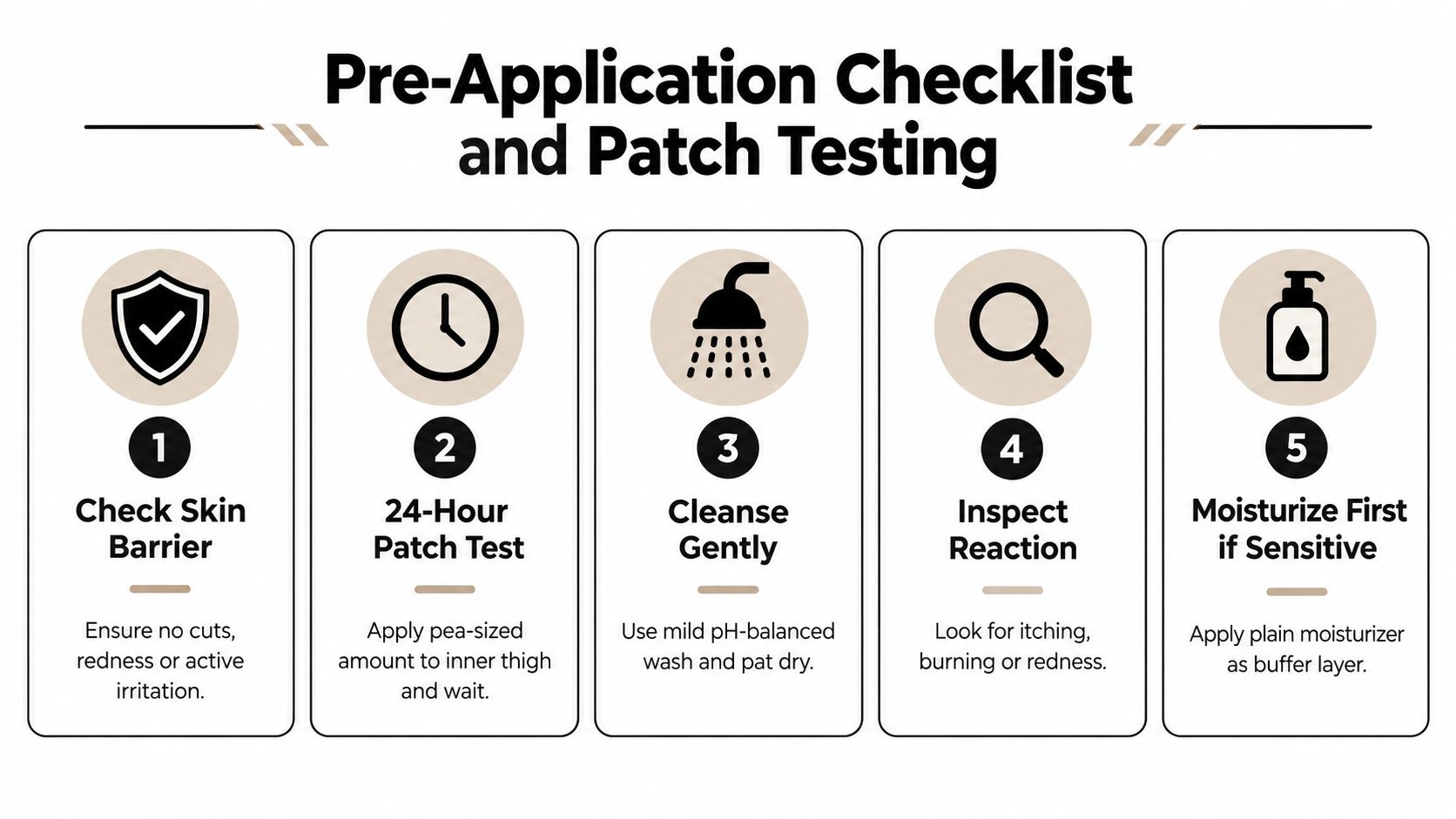
A controlled first test
Apply a fingertip-sized amount, or the quantity stated on the label, to the inner thigh or upper bikini line. Leave it undisturbed for 24 hours. Keep the test away from vulvar mucosa, the penis, scrotum, and all internal genital tissue.
Read the response conservatively:
- No reaction: Proceed cautiously.
- Mild, brief tingle: Do not increase frequency. Monitor for delayed redness or burning.
- Redness, swelling, itching, or persistent heat: Wash off if needed and discontinue the product.
- Blistering, marked pain, or a spreading rash: Seek medical advice instead of repeating the test.
Use a fragrance-free, low-pH cleanser, then pat the area completely dry. Damp skin can increase penetration and stinging, particularly with acids or retinoids. Start every third night. Increase to alternate nights or nightly use only while the skin remains calm.
Barrier first: Sensitive skin may tolerate a plain, fragrance-free moisturizer applied as a buffer. Avoid a thick occlusive layer that traps heat and sweat inside a rubbing fold.
The Intimate Skin Lightening Cream for Under Arms, Inner Thighs & Private Area is described in its catalog as containing tranexamic acid, niacinamide, and arbutin for exterior areas such as the bikini line, groin, underarms, inner thighs, and buttocks. Its catalog claims a reduction in the appearance of dark spots. Treat that statement as manufacturer-provided product information, not an expected result for every user.
Apply broad-spectrum SPF to treated skin that receives daylight. Photoprotection supports pigment control, so an exposed area should receive SPF 30 or higher. This step matters even when the lotion itself contains depigmenting ingredients.
Step-by-Step Application Technique
Use the lotion as part of a controlled ritual, not as a coating you keep adding throughout the day. Start after a shower or gentle cleanse, when the skin is clean and completely dry.
- Wash your hands. Cleanse the bikini line, inner thighs, or under-belly fold with a mild, fragrance-free product, then pat dry.
- Dispense a pea-sized to dime-sized amount onto your fingertips. The exact amount depends on the surface area. A thin film is enough; more product doesn't mean faster pigment removal.
- If your routine includes a water-based niacinamide or alpha-arbutin serum, apply it first to fully dry skin. Wait about 60 seconds, then apply the lotion. Don't layer multiple exfoliating or retinoid products in the same session.
- Smooth the lotion outward along the bikini line and inner thighs. Use light, upward strokes and avoid aggressive rubbing. Keep the product on exterior skin only.
- Let it absorb before dressing. Loose cotton underwear is preferable, and avoid heat or heavy sweating for roughly 30 minutes after application.
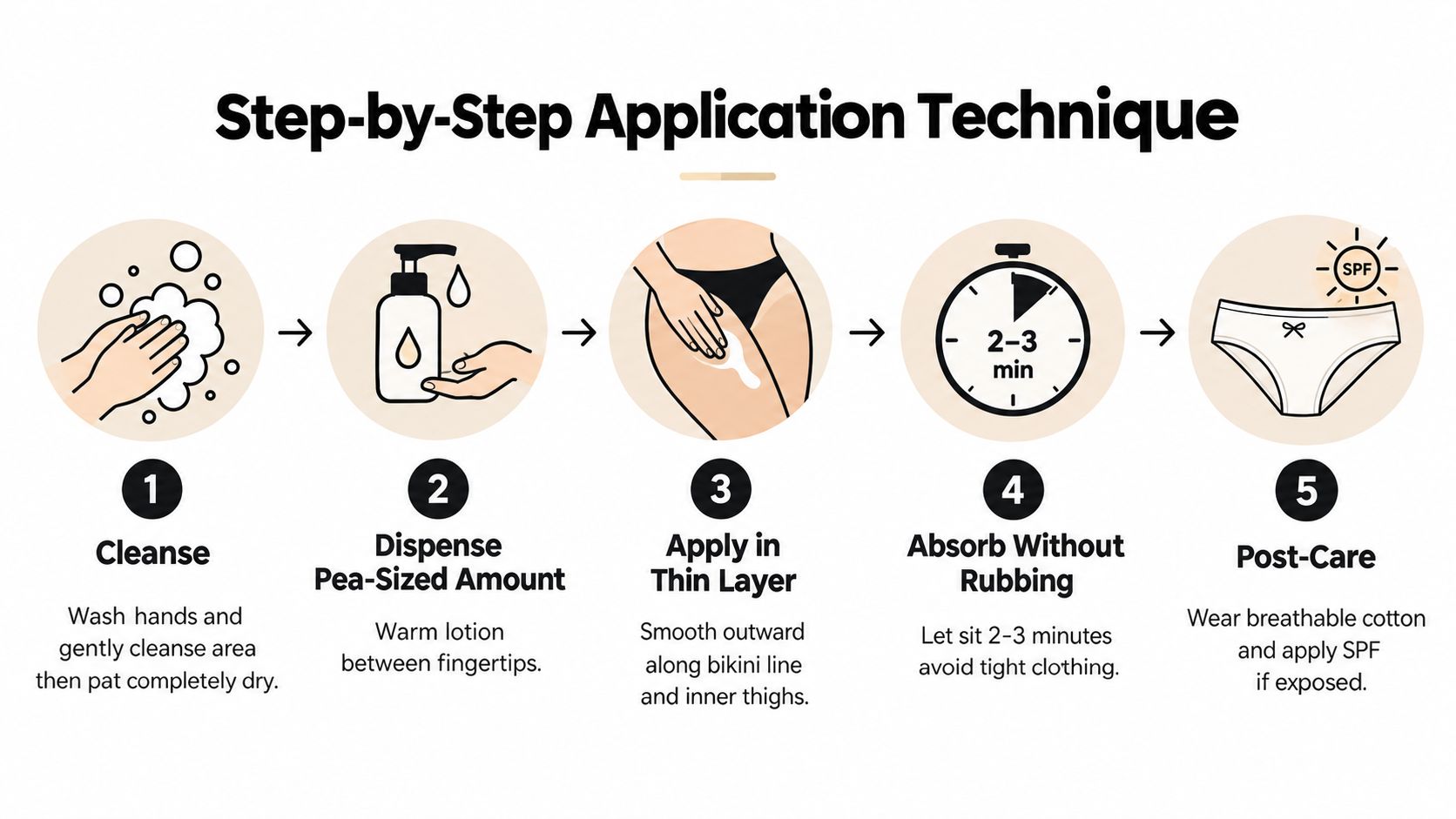
Morning and evening use
Morning care should stay light. Apply a thin lotion layer, then use broad-spectrum sunscreen on any exposed area. If the area remains covered by clothing, prioritize comfort, low friction, and avoiding trapped sweat.
Night is usually better for richer treatment because you can leave the product undisturbed. Azelaic acid or a retinoid may fit on alternate nights, but don't combine them with a new acid lotion immediately. Introduce one active change at a time so you can identify the cause if burning or peeling develops.
Never mix the lotion with physical scrubs, depilatory creams, lemon, baking soda, or freshly shaved skin in the same session. Hair removal should be planned separately, and irritation should settle before pigment treatment resumes. The most efficient routine is the one you can repeat without creating a new inflammatory injury.
Realistic Timelines and Results Milestones
Pigment fades according to its depth, cause, and ongoing irritation. Epidermal pigmentation from friction or post-inflammatory change may start looking more even after several weeks of consistent care. Dermal pigment and melasma-like hormonal patterns usually respond more slowly and may remain incomplete without professional treatment.
Topical treatment is not a guaranteed eraser. One systematic review reported complete-response rates of only 5.4%, while dermal pigmentation generally responds more slowly and less completely than epidermal pigment (systematic review of PIH treatment). A separate systematic review and meta-analysis covering 56 studies found measurable pooled improvements in melanin index and clinician-rated severity, without a significant increase in adverse skin reactions compared with controls (systematic review and meta-analysis of topical medical skincare).
| Intimate Whitening Body Lotion Milestones by Pigmentation Type | Epidermal / Friction Pigmentation | Dermal / Hormonal Pigmentation | Self-Audit Action |
|---|---|---|---|
| Week 4 | Texture may feel calmer, and tone may begin to look less uneven | Often little visible change | Check irritation, shaving, clothing, and application consistency |
| Week 8 | Early fading may be easier to see in standardized photos | A gradual response may begin | Continue only if the barrier remains comfortable |
| Week 12 | Reassess whether lightening has plateaued | Slow improvement may still be possible | Consider a dermatologist if there is no visible change |
| Week 16 and beyond | Maintenance may matter more than adding strength | In-clinic assessment may be appropriate | Review diagnosis, triggers, and active rotation |
Use a 30-30-30 photo protocol. Photograph the same area in the same lighting, from the same angle and distance, every 30 days. Memory and changing bathroom light are unreliable comparison tools.
A plateau can reflect an ongoing trigger, deeper pigment, or a need to rotate actives rather than increase strength. If friction, heat, or shaving irritation continues, stopping treatment may allow the darkening to return. Judge progress by comfort, consistent photographs, and whether the original trigger is controlled, not by daily shade changes.
Troubleshooting Sensitivity and Knowing When to See a Derm
A warm sensation that fades quickly isn't the same as escalating pain. Mild dryness may call for less frequent use and more bland moisturizer, while burning, swelling, or persistent redness means the active routine should stop.
Use the reaction itself as diagnostic information:
- Burning or escalating stinging: Rinse, pause acids and retinoids, and return to a bland barrier routine. Reintroduce only after the skin is fully calm.
- Micro-peeling: Extend the interval between applications. Don't scrub away flakes, because abrasion can restart inflammation.
- Red, itchy, or swollen skin: Consider irritant or allergic contact dermatitis. Stop the suspected product rather than layering another active over it.
- Darkening after irritation: Treat it as a post-inflammatory rebound, not evidence that you need a stronger bleaching product.
- Follicular bumps: Review shaving, waxing, occlusion, and heavy textures. A product that blocks follicles may be unsuitable for that fold.
Ceramides and a plain moisturizer can support barrier repair. Retinoids should be paused during active irritation. If exfoliation is contributing to discomfort, remove it before removing every other product. A minimal routine makes the cause easier to identify.
The referral decision
Arrange a dermatology visit for persistent irritation beyond seven days, sudden or asymmetric dark patches that look velvety or raised, or no visible change by week 12 despite consistent, tolerable use. Seek assessment sooner for bleeding, itching, crusting, or a palpable texture change. These findings can point toward conditions such as lichen simplex, acanthosis nigricans, or, less commonly, melanoma, rather than ordinary friction pigment.
Flat, gradually changing discoloration with a smooth surface is more compatible with a routine adjustment. Paradoxical darkening, increasing pain, or thickened skin requires clinical review. Velvety thickening in the groin, neck, or armpits deserves particular attention because acanthosis nigricans can be associated with insulin resistance.
Bring useful evidence to the appointment:
- Photos: Take weekly images under identical lighting.
- Symptom diary: Record burning, itching, peeling, shaving, waxing, and friction.
- Product list: Include full names, ingredients, start dates, and batch numbers.
- Treatment history: Note what improved the area and what caused worsening.
Ask whether the pattern fits post-inflammatory hyperpigmentation, melasma, acanthosis nigricans, follicular disease, or another diagnosis. You can also ask whether prescription hydroquinone, tranexamic acid, or an in-office peel is appropriate. A dermatologist may adjust the strength, change the active class, investigate an underlying condition, or recommend a treatment that shouldn't be self-prescribed for intimate skin.
The regulatory history of skin-lightening products supports this caution. The U.S. passed the Food, Drug, and Cosmetic Act in 1938, the FDA was limiting mercury in bleach creams by 1939, and commercial mercury skin lighteners were banned in 1973 (historical review of skin-lightening regulation). The category continues to draw scrutiny because products marketed to alter appearance can also affect bodily function.
Mesoderm RX offers body and intimate brightening formulas built around ingredients such as niacinamide, kojic acid, alpha arbutin, tranexamic acid, and exfoliating acids, depending on the product. Visit Mesoderm RX to compare the options, then choose a tolerance-led routine that matches your skin pattern rather than chasing the strongest formula.