


How to Lighten Underarms Naturally: Expert Tips 2026
If you've been told that “natural” underarm lightening starts with lemon juice, baking soda, or a rough scrub, that advice is outdated at best and harmful at worst. Dark underarms usually aren't a stain you can scrub off. They're a skin response. In many people, the trigger is inflammation, friction, irritant exposure, or repeated barrier damage.
That distinction matters. When skin is irritated, melanocytes respond by making more pigment. If you keep repeating the trigger, the darkness stays. That's why so many people try home remedies for weeks, then end up with more irritation, more sensitivity, and more discoloration.
A better answer to how to lighten underarms naturally is to stop thinking like a kitchen chemist and start thinking like a clinician. The safest “natural” strategy is not aggressive DIY. It's a low-irritation system that reduces inflammation, supports the barrier, and uses gentle brightening ingredients that make biological sense for a friction-prone area.
The Problem with 'Natural' Underarm Lightening
The search for a natural fix often stems from a desire to avoid harsh bleaching products. That instinct is reasonable. The mistake is assuming that anything from the kitchen is automatically safer than a well-formulated skincare product.
That's where underarm care goes wrong. Lemon juice is still widely promoted, yet recent dermatological analysis notes that high-acidity citrus applied to friction-prone areas like the underarms can trigger irritant contact dermatitis and worsen hyperpigmentation rather than improve it, as discussed in this review on the problem with lemon for underarm lightening. Baking soda creates a different problem. It pushes skin away from its normal acid balance and can leave the barrier more vulnerable.
Clinical reality: If a remedy stings, burns, or leaves the area tight and raw, it isn't “working.” It's inflaming the skin.
Underarm darkening needs a root-cause approach. Sometimes the issue is post-inflammatory hyperpigmentation from shaving or friction. Sometimes it's irritant dermatitis from deodorant ingredients. Sometimes it's a thicker, velvety pattern that points to acanthosis nigricans, which deserves medical evaluation rather than cosmetic guessing.
If you want a natural-looking result, focus on calm skin, not dramatic home hacks. The best routine is gentle, consistent, and boring in the right way. That's usually what gets results.
Why Underarms Darken The Biological Reality
Underarm pigmentation isn't one diagnosis. It's a visible sign with different causes. The two patterns people confuse most often are post-inflammatory hyperpigmentation, often shortened to PIH, and acanthosis nigricans.
PIH happens after irritation. The trigger might be shaving, friction, ingrown hairs, or a reaction to a product. The skin becomes inflamed, and melanocytes respond by producing more pigment. Acanthosis nigricans is different. It often appears as darker, thicker, velvety skin and can be associated with internal medical issues rather than simple surface irritation.

Melanin, tyrosinase, and inflammation
Melanin is the pigment that gives skin its color. It isn't the enemy. It's part of the skin's defense system. Tyrosinase is one of the key enzymes involved in making melanin. When skin is irritated, the inflammatory cascade can stimulate this pigment pathway.
That's why darkening often follows repeated physical or chemical stress. The underarm is especially vulnerable because the skin is thin, occluded, and exposed to constant movement. Add deodorant, sweat, hair removal, and rubbing from clothing, and you have an ideal setup for ongoing pigment production.
A separate trigger also matters. UV exposure is a primary external trigger for melanogenesis, increasing melanin production as a protective response, as explained in this overview of hyperpigmentation biology. Even though underarms aren't sun-exposed all day, they're not biologically exempt from pigment signaling.
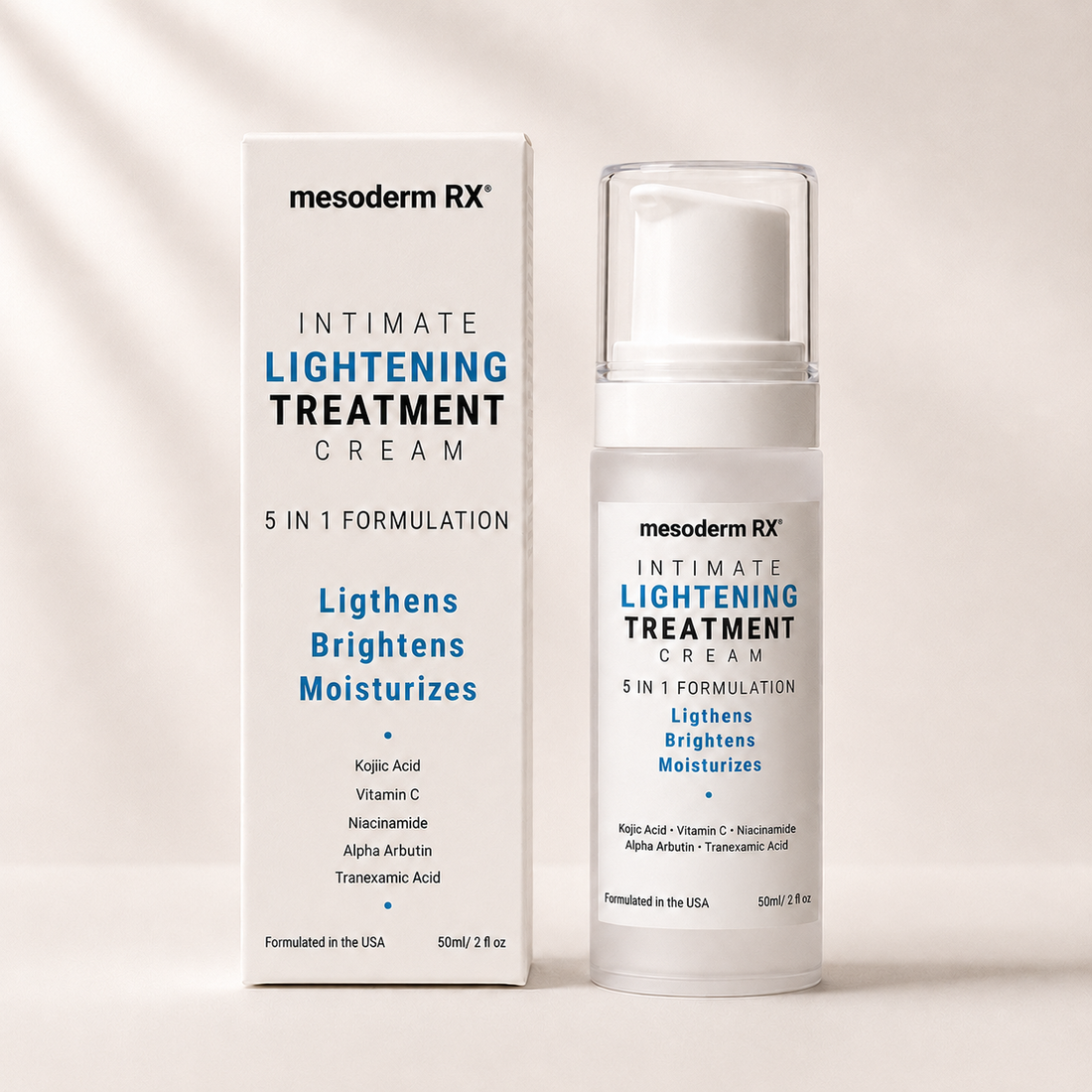
Featured Product
Intimate Skin Lightening Cream for Under Arms, Inner Thighs & Private Area
WHITENS AND LIGHTENS FOR A SMOOTHER, EVEN COMPLEXION.
Shop Now →Why shaving causes so much trouble
The underarm doesn't just react to what you apply. It reacts to what you repeatedly do to it. The act of shaving underarms at intervals of less than 7 days can increase the risk of post-inflammatory hyperpigmentation by up to 45% because repeated abrasion disrupts the skin barrier and triggers inflammation, according to this review of post-inflammatory hyperpigmentation in skin of color.
That number tracks with what clinicians see every day. Frequent shaving creates microtrauma. Then deodorant, sweat, and friction hit skin that's already irritated.
Signs that point to the cause
Use these clues to think more clearly about what's happening:
- Patch looks smooth but darker after shaving or irritation: PIH is more likely.
- Patch feels thickened or velvety: acanthosis nigricans should be considered.
- Area burns, itches, or reacts to deodorant: irritant dermatitis may be driving the color change.
- Darkness is paired with rough texture or ingrowns: chronic inflammation is often involved.
Dark underarms don't usually come from “dirt” or poor hygiene. They come from skin responding to stress.
That's the biology behind how to lighten underarms naturally. You don't bleach away a stress response. You remove the stress, calm the inflammation, and then use targeted ingredients to interrupt excess pigment production.
Common Myths That Worsen Underarm Darkness
“Natural” does not mean safe for underarms. In practice, many DIY fixes make pigmentation last longer because they keep the skin inflamed.

Myth one says lemon juice is a gentle natural bleach
Lemon juice is a frequent cause of irritation in this area. The low pH can sting, disrupt the barrier, and trigger irritant dermatitis on skin already dealing with sweat, friction, and shaving. Once that irritation starts, melanocytes respond by producing more pigment.
That is the pattern people miss. The skin may feel “clean” or tingly, but tingling is not treatment. It is often early irritation.
Myth two says scrubbing harder removes darkness faster
Pigment does not sit on the surface like dust. It is produced in the skin after repeated stress, so rough scrubs, brushes, and gritty DIY pastes usually add more of the same stress that caused the problem.
Physical exfoliation has a place, but only in a controlled form and only if the skin is calm. For sensitive underarms, a gentle exfoliant for sensitive skin makes more sense than sugar scrubs, loofahs, or repeated rubbing with a washcloth.
Myth three says all deodorants are neutral
Underarms react to ingredients, not marketing claims. Fragrance, alcohol, baking soda, and some preservative systems can irritate certain people, especially after shaving. If the area burns, itches, or gets more discolored after application, the deodorant may be part of the problem.
This is why brightening products fail so often when the daily trigger stays in place. Pigment treatment cannot outwork constant inflammation.
Myth four says any plant-based remedy is automatically gentler
Form matters. A soothing hydrosol and a concentrated essential oil are not interchangeable, especially on thin, reactive skin. Aroma Warehouse's hydrosol essential oil comparison explains why gentler botanical formats tend to be better tolerated than strong aromatic oils in sensitive areas.
I tell patients to judge a product by irritation potential, not by whether it sounds natural.
Safe Underarm Care Do's and Don'ts
| Practice to Avoid (Don't) | Effective Alternative (Do) |
|---|---|
| Apply lemon juice directly to the underarm | Use gentle brightening ingredients made for sensitive skin |
| Scrub with abrasive tools or gritty DIY mixtures | Exfoliate mildly and infrequently with low-irritation formulas |
| Keep shaving over irritated skin | Pause hair removal when skin is inflamed, then switch to a gentler method |
| Use fragranced or harsh deodorants on reactive skin | Choose fragrance-free, low-irritation formulas |
| Treat every dark patch as the same problem | Look at texture, symptoms, and triggers before choosing treatment |
What works better than myths
Start by removing the trigger. Then let the skin settle before adding treatment.
- Stop anything that stings or burns: irritation is a cause of darkening, not a sign of progress.
- Cut back on friction: tighter clothing, repeated shaving, and rubbing all matter.
- Protect the barrier: calmer skin tolerates brightening ingredients better.
- Use formulated products: underarms respond better to low-irritation actives than to pantry remedies.
A Gentle Routine to Lighten Underarms Safely
A useful routine for underarm pigmentation has to do three jobs at once. It needs to reduce irritation, normalize cell turnover, and slow excess pigment signaling. If you only chase “lightening,” you usually miss the reason the area got dark in the first place.

Daily routine
Start in the shower. Use a mild, pH-balanced cleanser and wash the area with your hands, not with a rough tool. Underarms don't need aggressive cleansing.
After bathing, dry the area fully and apply a treatment product meant for discoloration-prone, sensitive skin. If you like botanically oriented supporting products, the distinction between soothing water-based extracts and stronger aromatic concentrates matters. Aroma Warehouse's guide to hydrosol essential oil comparison is useful if you're trying to understand why gentler formats tend to make more sense for reactive areas.
Finish with a simple moisturizer if the skin feels dry or easily irritated. Brightening works better when the barrier isn't compromised.
Weekly rhythm
You don't need a complicated schedule. You need consistency.
- On most days: cleanse gently, apply your brightening treatment, then moisturize if needed.
- A few times a week: use a mild exfoliating step only if the skin is calm.
- After hair removal: simplify the routine and avoid strong actives until the area feels settled.
If you're unsure how to choose exfoliation for reactive skin, Mesoderm RX has a practical guide on choosing a sensitive skin exfoliant that aligns with this barrier-first approach.
What a treatment step should contain
The most useful underarm formulas combine pigment regulators with gentle resurfacing and anti-inflammatory support. One example is Underarm Brightening Cream, Fade Dark Underarms in 30 Days, a dermatologist-tested, vegan formula powered by 8 clinically-inspired actives including Tranexamic Acid, Kojic Acid, Arbutin, Niacinamide, Vitamin C, AHA, Azelaic Acid, and Hexylresorcinol.
Practical rule: If your routine leaves the underarm stinging every day, the routine is too aggressive for that area.
A simple sequence that works
- Cleanse softly. Remove sweat and residue without stripping the skin.
- Treat on dry skin. Apply brightening actives to minimize dilution and improve consistency.
- Protect the barrier. Use moisture and avoid unnecessary friction for the rest of the day.
That's how to lighten underarms naturally in a way that respects skin biology. Gentle, repeatable care beats dramatic DIY every time.
High-Performance Actives and Formulated Solutions
Underarm pigmentation responds best to formulas built for a sensitive, high-friction area. The goal is not to throw stronger acids at the skin. The goal is to lower melanocyte stimulation, smooth excess buildup, and keep the barrier intact so the skin stops generating new discoloration.
Which ingredients actually make sense
The most useful actives each address a different part of the problem. Tranexamic acid helps interrupt inflammation-linked pigment signaling. Niacinamide supports barrier repair and can improve uneven tone over time. Arbutin slows pigment formation through tyrosinase inhibition. Azelaic acid helps with both discoloration and irritation-prone skin. Kojic acid and low-strength AHAs can improve visible dullness and rough texture, but only if the formula is mild enough for repeated use.
Formula design matters as much as the ingredient list. I look for products that combine brightening agents with soothing and barrier-supportive components, because the underarm usually darkens after repeated low-grade irritation, not from pigment excess alone.
For a broader clinical overview beyond the underarm specifically, ProMD Health's summary of hyperpigmentation treatment options is a solid reference point.
Why multi-active formulas outperform random mixing
Separate single-ingredient products often create a stop-and-start cycle. One product exfoliates, another irritates, then everything gets paused while the skin calms down. That pattern slows progress.
A well-made multi-active cream can be easier to tolerate because the concentrations, pH, and vehicle are designed to work together. That is the practical advantage. You get pigment control, mild resurfacing, and barrier support in one step instead of improvising with a stack of products that were never tested together.
A factual example is Mesoderm RX Intimate Lightening Cream, which combines ingredients such as tranexamic acid, niacinamide, and arbutin in a single formula intended for delicate areas. The value is the multi-pathway design, not an unsupported percentage claim.

How to choose a formula intelligently
Use a short filter.
- Built for sensitive areas: underarm skin tolerates less than the face or body.
- Multiple pathways covered: choose formulas that address pigment, texture, and irritation together.
- Low-irritation base: fragrance-free and hydroquinone-free options are often easier to use consistently.
- Realistic repeat use: a gentler cream used for months usually outperforms an aggressive product you have to keep stopping.
For a closer look at ingredients that can help fade hyperpigmentation without provoking more irritation, focus on agents with a clear role in pigment control and a track record of tolerability.
The right brightening formula reduces pigment signaling while keeping the underarm quiet enough to heal.
Lifestyle Adjustments to Prevent Recurrence
Underarm darkening often comes back for one reason. The skin is still being inflamed.

In clinic, persistent darkness is often less about stubborn pigment and more about repeated irritation from shaving, friction, sweat retention, and deodorant ingredients. Many cases treated as a “need stronger lighteners” problem improve faster once the triggers stop. That matters because pigment fades poorly if the area stays inflamed.
Reduce friction before it turns into pigment
Mechanical rubbing keeps melanocytes active. Tight armholes, rough seams, and stiff synthetic fabrics can create low-grade inflammation day after day, especially in heat. The result is gradual darkening that people often blame on poor hygiene or “genetics” when the underlying issue is chronic irritation.
A few clothing changes make a real difference:
- Choose soft, breathable fabrics: less rubbing and less trapped heat usually means fewer flares.
- Watch for repeated contact points: one dark patch under a seam or edge usually points to friction.
- Change out of damp workout clothes soon after exercise: moisture plus rubbing weakens the barrier and increases reactivity.
Sweat is not the main problem. Sweat sitting under occlusive fabric, mixed with friction and fragranced products, is.
Rethink hair removal if marks keep returning
Hair removal is a common recurrence trigger because it injures the barrier in a place that already gets heat, sweat, and rubbing. Shaving too closely, shaving dry, or going over the same area repeatedly can leave micro-cuts and razor bumps. Waxing can work well for some people, but only if the skin tolerates it and aftercare is consistent.
If ingrown hairs are part of the cycle, each bump can leave post-inflammatory pigment behind. That is why better technique often helps more than adding another brightening product. If waxing is part of your routine, use the aftercare advice in this guide to prevent ingrowns with Black Coral Wax.
Here's a useful visual overview of underarm care habits and triggers:
Audit deodorant, timing, and daily habits
If deodorant burns, stings, or leaves the skin itchy later in the day, treat that as a warning sign. Fragrance, alcohol, and certain preservative systems can keep a mild dermatitis going without obvious rash. Darkening follows because inflamed skin signals for more pigment.
Use a simpler approach:
- Apply deodorant and treatment products only to calm skin: freshly shaved underarms are easier to irritate.
- Stop brightening actives during a flare: burning, tenderness, scaling, or itch means barrier repair comes first.
- Keep a simple pattern log: if discoloration appears after a specific deodorant, workout top, or hair-removal method, the trigger is usually hiding there.
For a broader prevention strategy beyond the underarms, see this guide on evening out skin tone on the body.
Frequently Asked Questions on Underarm Lightening
How long does it take to see improvement
Underarm lightening is gradual. The area improves fastest when you remove the ongoing trigger, especially friction or product irritation, and then stay consistent with a low-irritation routine. If you keep switching products or over-exfoliating, progress usually stalls.
Can dark underarms be a sign of a medical condition
Yes, sometimes. If the skin looks thick, velvety, or is darkening in other body folds too, acanthosis nigricans should be considered. That pattern can be associated with internal health issues and deserves medical evaluation. If the area is itchy, sore, or suddenly changing, a clinician should examine it rather than treating it as a routine cosmetic concern.
Is it safe to use brightening products right after shaving or waxing
Usually, that's when you should be most cautious. Freshly shaved or waxed skin is more vulnerable to irritation. If a formula contains exfoliating acids or multiple actives, waiting until the skin feels calm is often the safer choice. Immediately after hair removal, barrier support matters more than aggressive correction.
Do natural remedies ever help
Some can, but “natural” isn't the same as safe. Underarm skin responds better to gentle, well-tolerated ingredients than to harsh DIY acids or abrasive scrubs. The right natural strategy is less about homemade mixtures and more about minimizing inflammation while using evidence-based brightening ingredients.
What if nothing seems to work
Recheck the diagnosis. Persistent darkness may be driven by irritant dermatitis, friction, hair-removal trauma, or a medical issue rather than pigment alone. When treatment fails, the missing step is often identifying the trigger, not buying a stronger product.
If you want a more precise way to approach underarm discoloration, explore Mesoderm RX. The brand focuses on high-potency, minimal-additive formulas for uneven tone and dark spots, with hydroquinone-free, fragrance-free, vegan options designed for sensitive skin.